

 Vampire Weekend's Surprising Jewish Stories


3 min read


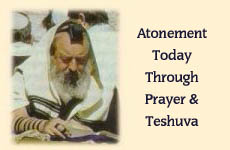
If there is no Temple, how do we achieve atonement?
When a person transgresses a mitzvah in the Torah, he destroys some of his inner holiness. He cuts himself off from the Godliness that lies at the essence of his soul.
When a person does Teshuva - "spiritual return" - he renews and rebuilds the inner world that he has destroyed. On one level, he is rebuilding his personal "Temple" so that God's presence (so to speak) will return there to dwell.
When one does Teshuva it is usually based on certain powerful internal realizations. Today, without the Temple service, one of the most powerful ways is through the inspiration of prayer. In fact, the Talmud (Brachot 26b) says that the formal daily prayers were instituted to replace the daily sacrifices.
Another source from the Talmud (Yerushlami Brachot) notes that in discussing the Temple service, the phrase "as God commanded Moses" occurs 18 times in the Torah portion of the Torah Pekudei. This is an allusion to the fact that the Shemonah Esray - the 18-blessing prayer which we recite three times daily ? now serves in place of the Temple service.
The verse says: "The sacrifices of God are a broken spirit" (Psalms 51:19). This teaches us that a person who does Teshuva is regarded as if he had ascended to Jerusalem, built the Temple, erected the Altar, and offered all the offerings upon it. - Midrash, Vayikra Raba 7:2
The text of the Shmonah Esray was formulated by prophets who knew how to awaken deep yearnings within the Jewish soul. Through prayer, we are to achieve a spiritual renewal which culminates in the desire for a full and total connection to God.
And now, because of our sins, the Holy Temple is destroyed and the Daily Offering discontinued; we have neither a Kohen at his service, nor a Levite on his platform, nor an Israelite at his station. However, You have said, "Let the offerings of our lips replace bulls." Therefore, let it be Your will, our God and the God of our ancestors, that the prayer of our lips be considered and accepted and regarded favorably before You as if we had offered the Daily Offering at its appointed time, and stood in attendance at its service.
- Daily Shacharit Prayer
with thanks to Rabbi Aryeh Leib Nivin.