

 Identifying as a Jew



2 min read


Why can't benefit be derived from the light of the menorah?
At Chanukah we light one candle for each night: one the first night, two the second, up until eight lights on the last night. But there is also an additional candle, the shamash, meaning "servant." The reason for this candle is that we are not allowed to use the regular Chanukah lights for our own use; it is the job of the shamash to provide us with light if we need it for some utilitarian purpose.
This rule, that Chanukah lights are not for our own use, seems to reflect the message of Chanukah. Greek culture was generally tolerant of alien cultures, and their syncretic religion was tolerant of other religions. Furthermore, Judaism was not a proselytizing religion, which might have undermined the Greek practices. Why should the Hellenistic conquerors have endeavored to forbid the study and observance of Torah?
While Greek philosophy was focused on truth, Greek religion was focused on usefulness. Greek civilization's best minds were occupied in ascertaining the laws of beauty (aesthetics), the laws of language, the laws of nature, the laws of human society. They even interested themselves in theology – the supposed laws which govern the Divine. But they seldom interested themselves in Torah – the laws by which the Divine governs us, demands which the Creator places on human beings.
The Greeks could accept the fact that gods were more powerful than man, but they could not accept the fact that any being was master of man. Their ways of "serving" their gods were really ways of mastering them, indulging and outwitting them. It seems that what bothered them about the Jews was not that the Jews served one God, but rather that they served one God.
So it is fitting that we commemorate our cultural victory over Hellenism by lighting a light which does not serve us, showing that our religion is distinguished by recognizing that the world is not ours to do as we like, and that we can use it for our own purposes only in accordance with the dictates of God's will.
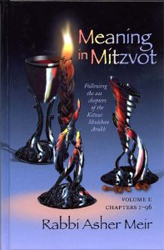 Adapted from Meaning in Mitzvot (Feldheim), a two-volume work of insights encompassing the range of Jewish observance.