

 An Open Letter to University Presidents



7 min read


The film's powerful Rosh Hashanah message.
It's a wonderful life.
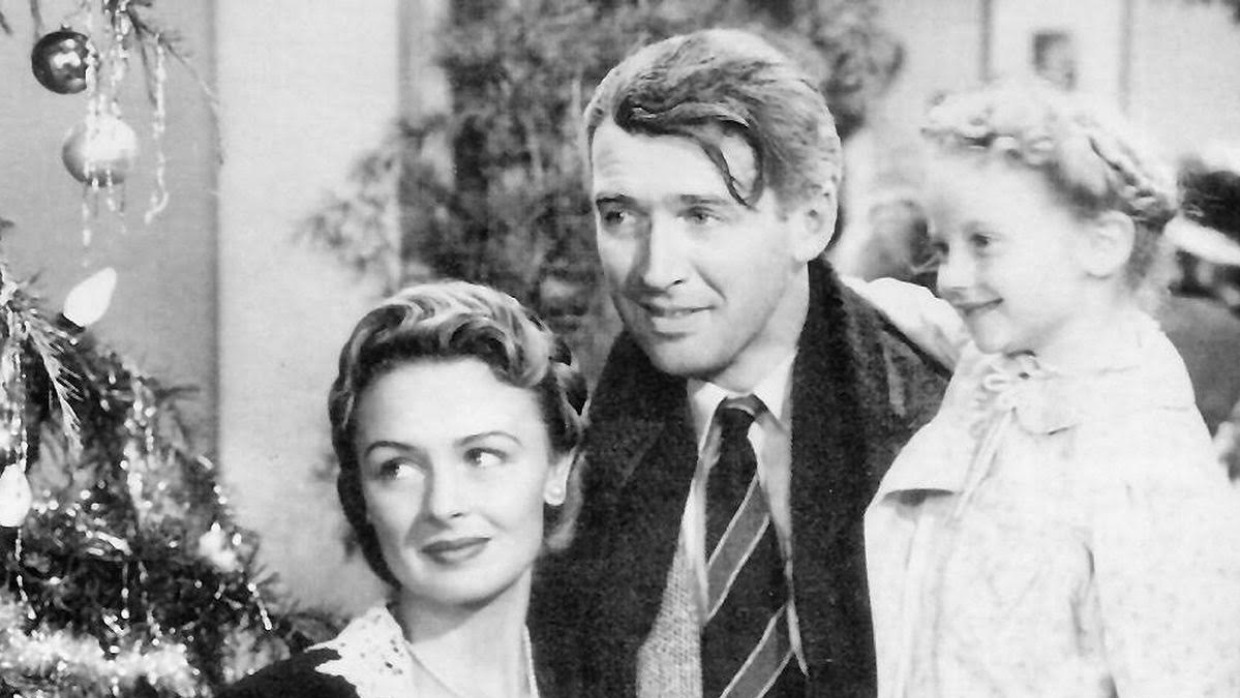
At least that's what a movie by that title, considered a classic of American cinema, wants us to believe. George Bailey, the hero of the film powerfully acted by James Stewart, finally decides upon suicide as his only recourse to solve his financial problems. Because he has a $15,000 life insurance policy he feels he's worth more dead than alive. Acting on his desire to help his family he's ready to jump off a bridge when the angel Clarence intercedes not only to save his life but to make him realize that it is really worth living.
The way the angel accomplishes this incredible transformation from a man anxiously seeking his own annihilation to a person perceiving the true value of his existence and the ultimate meaning of his life contains a powerful Rosh Hashana message.
How should we fulfill our obligation to better ourselves as we reach the 10 days of repentance on the Hebrew calendar? Many of us emphasize focusing on our sinfulness. It is a time to seek out our flaws, to seriously consider our failings. And of course that must be part of our personal stock taking.
First become aware of the positives in your life.
But that cannot be the whole story. If we spend our time only in self-condemnation we stand in danger of losing sight of the ways in which we have been successful. If we stress only the ways we've gone wrong we won't ever be able to notice our accomplishments. We need to first become aware of the positives in our lives.
This point explains the sequence of the days book-ending our spiritual journey from Rosh Hashana to Yom Kippur. On Yom Kippur we fast. We beat our breasts in confession of all of our sins. We cry out to God, “Who are we? What is our lives? We come from the dust of the earth and we return to the dust of the earth.” It is a recognition of how much we have failed, how far we have come from reaching our fullest potential. Yom Kippur is a necessary restraint to our egos. Before we can feel fully reconciled with God it is essential for us to demonstrate our understanding of our imperfection.
But it is not Yom Kippur that begins the process of our purification. The 10 days of repentance start with Rosh Hashana for good reason. Rosh Hashana doesn't mark the first day of creation, but rather the last -- the day on which the first human beings were created. Just as a host fully prepares for his guests before they enter his home, so too, the Midrash explains, God filled the earth on the first five days of creation with everything people might need before He brought them into being. Adam and Eve were created on the sixth day to endow them with a sense of their uniqueness and spiritual stature. It is we who were created in the image of God. Realizing this is a necessary prelude to leading a life worthy of our divine origin and our sacred nobility.
So on Rosh Hashana we begin getting closer to God by reminding ourselves that we are Godly, that we have a pure soul. On Yom Kippur we conclude the journey by acknowledging that we have not yet achieved all that of which we are capable.
Rosh Hashana asks us to remember how much we are worth to God, to our families, to our friends, and to the world. We feast as an expression of the joy we find in our life. And that understanding must precede the Yom Kippur emphasis on our failings that prompt us to fast and to cry over our imperfections.
To lead our lives only from a Yom Kippur perspective is to insure discontent and despondency. To be overwhelmed by a constant feeling that we are failures is to invite the pernicious desire to end it all. Why bother going on if we can never do anything right, why continue the struggle if we are doomed to always losing the battle? Suicide is the response chosen by those weighed down by a devastating sense that they accomplished nothing in their lives. It goes against God who as the ultimate giver of life decided that we still have a positive role to play here on earth. (Article continues below.)
Click below to watch a trailer for "It's a Wonderful Life"
In the film, after suffering a financial setback of $8,000 that puts his small saving and loans bank at risk, George feels his life is worthless. Despite the serious consequences this entails, if George would have framed his life as a balance sheet of accumulated good versus the mistakes and bad things he has done, he would have been able to put events in a more balanced perspective and not judge himself so harshly.
In the cosmic balance sheet of one's life, sin does not wipe out the positive gains.
In business, your losses can wipe out your balance sheet. But in the cosmic balance sheet of one's life, sin does not wipe out the positive gains. You are not your business or profession.
When George bitterly wept that he wished he would never have been born, Clarence, with his angelic power, showed him what the world would have been like if his wish really came true. He showed him his life's balance sheet. George never realized how many people he had affected during his lifetime. He had no idea how different his community, his family, his friends, his neighbors, and indeed the world would have looked had he never been on earth.
When George comes to realize how many lives he has touched and how much of an impact he has had on so many others, he can at last acknowledge the truth of his brother’s toast that he is “the richest man in town.”
There are countless “Georges” among us. There are all too many who deserve to be recognized as successes when we consider the ripple effects of their deeds translated into the achievements of others. And perhaps most relevant of all, in the time of our own introspection, as we feel ourselves burdened by the sins of our failures, we ought to make room for the contentment and peace of mind that comes from knowing that God also weighs the good we inspire in all those around us.
Perhaps the most powerful irony associated with “It's a Wonderful Life,” is the message implicit in its reception when it was released in 1946. The movie was a box office failure leading critics to say that Frank Capra, producer and director, was past his prime and no longer capable of producing a major motion picture. What an incredibly mistaken evaluation for a film that today is ranked by the American film industry as one of the top 10 classic movies in its genre ever made. What appeared at first glance to have been a failure is in retrospect one of the most outstanding successes. Isn't that the whole point of the film itself?
As we reflect upon the meaning of our earthly existence before the High Holy days, keep in mind that sometimes it takes years for the beauty of our own lives and its significance to be fully recognized.