

 Iran’s Attack on Israel

4 min read


"Where was God in those days?" asked the pope. Here's a possible answer.
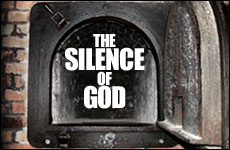
"Where was God in those days?" asked Pope Benedict XVI as he stood in Auschwitz. "Why was he silent? How could he permit this endless slaughter, this triumph of evil?"
It is the inevitable question in Auschwitz, that vast factory of death where the Nazis tortured, starved, shot, and gassed to death as many as a million and a half innocent human beings, most of them Jews. "In a place like this, words fail," Benedict said. "In the end, there can be only a dread silence, a silence which itself is a heartfelt cry to God: Why, Lord, did you remain silent?"
News reports emphasized the pope's question. Every story noted that the man who voiced it was, as he put it, "a son of the German people." No one missed the intense historical significance of a German pope, on a pilgrimage to Poland, beseeching God for answers at the slaughterhouse where just 60 years ago Germans broke every record for shedding Jewish blood.
And yet some commentators accused Benedict of skirting the issue of anti-Semitism. The national director of the Anti-Defamation League said that the pope had "uttered not one word about anti-Semitism; not one explicit acknowledgment of Jewish lives vanquished simply because they were Jews." The National Catholic Register likewise reported that he "did not make any reference to modern anti-Semitism."
In truth, the pope not only acknowledged the reality of Jew-hatred, he explained the pathology that underlies it. Anti-Semites are driven by hostility not just toward Jews, he said, but toward the message of God-based ethics they first brought to the world.
"Deep down, those vicious criminals" -- he was speaking of Hitler and his followers -- "by wiping out this people, wanted to kill the God who called Abraham, who spoke on Sinai and laid down principles to serve as a guide for mankind, principles that are eternally valid. If this people, by its very existence, was a witness to the God who spoke to humanity and took us to himself, then that God finally had to die and power had to belong to man alone -- to those men, who thought that by force they had made themselves masters of the world."
Hitler knew that his will to power could triumph only if he first destroyed Judeo-Christian values.
The Nazis' ultimate goal, Benedict argued, was to rip out Christian morality by its Jewish roots, replacing it with "a faith of their own invention: faith in the rule of man, the rule of the powerful." Hitler knew that his will to power could triumph only if he first destroyed Judeo-Christian values. In the Thousand-Year Reich, God and his moral code would be wiped out. Man, unencumbered by conscience, would reign in his place. It is the oldest of temptations, and Auschwitz is what it leads to.
"Where was God in those days?" asked the pope. How could a just and loving Creator have allowed trainload after trainload of human beings to be murdered at Auschwitz? But why ask such a question only in Auschwitz? Where, after all, was God in the Gulag? Where was God when the Khmer Rouge slaughtered 1.7 million Cambodians? Where was God during the Armenian holocaust? Where was God in Rwanda? Where is God in Darfur?
For that matter, where is God when even one innocent victim is being murdered or raped or abused?
The answer, though the pope didn't say so clearly, is that a world in which God always intervened to prevent cruelty and violence would be a world without freedom -- and life without freedom would be meaningless. God endows human beings with the power to choose between good and evil. Some choose to help their neighbor; others choose to hurt him. There were those in Nazi Europe who herded Jews into gas chambers. And there were those who risked their lives to hide Jews from the Gestapo.
The God "who spoke on Sinai" was not addressing himself to angels or robots who could do no wrong even if they wanted to. He was speaking to real people with real choices to make, and real consequences that flow from those choices. Auschwitz wasn't God's fault. He didn't build the place. And only by changing those who did build it from free moral agents into puppets could he have stopped them from committing their horrific crimes.
It was not God who failed during the Holocaust or in the Gulag, or on 9/11, or in Bosnia. It is not God who fails when human beings do barbaric things to other human beings. Auschwitz is not what happens when the God who says "Thou shalt not murder" and "Thou shalt love thy neighbor as thyself" is silent. It is what happens when men and women refuse to listen.