


 Iran’s Attack on Israel

7 min read


Do you know what your child is reading?
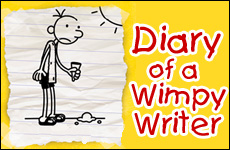
A new hero is quietly taking our nation by storm, capturing the adoration of children everywhere. He doesn’t battle villains or save the world, in fact he’s just a wimpy kid.
The “Diary of a Wimpy Kid” is currently the best selling book on Amazon.com, and #1 New York Times Bestseller. Libraries can’t get enough copies, and the publisher, Amulet Books, increased their initial printing of the latest book, “Dog Days,” from three to four million.
So what does Greg Heffley, the wimpy middle-schooler, do that makes him so popular with millions of American children? Nothing much, besides cheating, lying, stealing, picking on any kid even smaller than him, and making fun of everybody in the process.
To get a good feel for the Wimpy Kid series, I opened up to a random page to see what our hero was up to. Chirag, a little Indian kid in Greg’s class, was supposed to move back to India over the summer. Despite a big goodbye party, the family ended up staying. Greg decides that it’s a great opportunity to play a trick and pretends like Chirag doesn’t exist anymore. Soon he gets the whole class to go along with him and little Chirag becomes a living non-entity to the entire class. When Chirag tries to entice a classmate into admitting that he exists by promising him a corn dog, Greg says, “Hey, there’s a corn dog floating in the air,” grabs it, and eats it in two bites.
Greg defends himself and says:
“Before you go and say I’m a bad friend for teasing Chirag, let me just say this in my own defense: I’m smaller than about 95% of the kids at my school, so when it comes to finding someone to pick on, my options are pretty limited.”
The running theme of the series is that Greg is little kid who gets picked on, so anything he does to others is understandable under the victimhood license. That license, parenthetically, is the same justification given by terrorists, people who commit widespread fraud, and sexual predators.
Parents are outraged at the book's moral underpinnings, while PhDs are praising it for “its fresh look at the authentic challenges of middle school youth.”
In another episode, Greg and his friend Rowley decide to make a haunted house. They put up signs advertising that there will be real sharks, with admission at 50 cents. A big group of gullible little kids show up, so they tell them that 50 cents was a typo and it really costs two bucks. When the first little kid pays up, they tell him to crawl under a bed and then start screaming at him from both ends of bed until the kid rolls up in a ball crying. By now, Rowley’s father comes down and breaks up the whole venture. The moral of the story?
“The good news is, since Rowley’s father didn’t believe us, [that they were running a haunted house] he didn’t make us refund Shane’s money. So at least we cleared two bucks today.”
Trail of Controversy
Following the spectacular success of the “Diary of a Wimpy Kid” series is a trail of controversy. Parents are outraged at the book's moral underpinnings, while PhDs are praising it for its “realism” and “its fresh look at the authentic challenges of middle school youth.” To excuse himself from the uproar, the author, Jeff Kinney, claims that he really wrote the books for adults and was surprised by how children took to it. However, even after its popularity amongst 8-12 year olds became clear (these books are in the juvenile section in every library I called), he kept writing them with the same tone and flavor.
In a recent New York Times article about the series, Dr. Joshua Sparrow, a child and adolescent psychiatrist at Harvard Medical School, said “It really captures the struggle of a child that age trying to figure out what it means to be a person. I think it can help parents tune into what kids know and how they think. It captures what a child is able to get and what’s beyond their reach, and how you have to adjust your expectations because they are still a work in progress.”
He’s joined by Dr. Lawrence Rosen, a pediatrician who founded the Whole Child Center in Oradell, N.J., who says he has talked about the series with his third-grade daughter, who says she likes that the main character is “not perfect.”
Not perfect? The kid is totally diabolical! Everything he does is just plain bad. He treats his parents with contempt, his friends as “morons, jerks, nerds, and dorks,” has no compunctions about stealing, lying, or hurting anyone’s feelings, and never makes a single good judgment call. He’s vindictive, jealous, malicious, lazy, and insensitive. If this book “captures what a child is able to get and what is beyond their reach,” it might be time for all parents to clock out, because we need to lower our expectations to the point where we can’t even expect the least bit of integrity, sensitivity, or goodness from our children.
Stop selling our children short!
There are also many parents who say, “Well, at least my kids are reading.” The internet is filled with testimonials about children who were frustrated readers until they got their hands on a Wimpy Kid book. This is also disturbing since people are settling for mediocrity, “I’d rather he not read it… but at least he’s reading.” Why settle? We can give our children the best of both worlds. There are books that are both interesting and moral, they just take time to find. (See below for a few recommended books.) People can also help their child learn to love reading when they are young, so that the child will be interested in reading quality content on their own.
One episode from the latest book is particularly instructive in understanding the whole phenomenon. Greg wants money, so he starts a lawn mowing business. Being lazy, he does a haphazard and incomplete job. When the customers complain, his father re-mows the lawns for free. Of course, Greg insists he’s done nothing wrong. “I’m trying to find a way to earn money without doing any actual work,” he explains.
Perhaps this episode aptly describes author Jeff Kinney. Sure, a guy with his talent could work a bit harder and come up with books that would be interesting and compelling without giving our kids a terrible role model, but, “he’s trying to find a way to earn money without doing any actual work.” The same goes for the theory of “well at least my kid is reading.” That can be translated as, “I’m trying to find a way to get my kid literate without doing any actual work.”
It’s sad to think that libraries, often elementary school libraries, across the nation are buying multiple sets of the Wimpy Kid Diary series. As a parent whose oldest child is just beginning to read, it reminds me of how important it is to monitor what my child is reading, and what messages she’ll be subconsciously absorbing.
All children need heroes, people they can emulate. Let’s be proactive in deciding who they are.
|
Holes
|
The Mysterious Benedict Society
|
Chains
|
|
The Giver
|
Tuck Everlasting
|
The Goose Girl
|
And if you're having trouble getting your child to read, why not read with them?