

 Iran’s Attack on Israel


9 min read


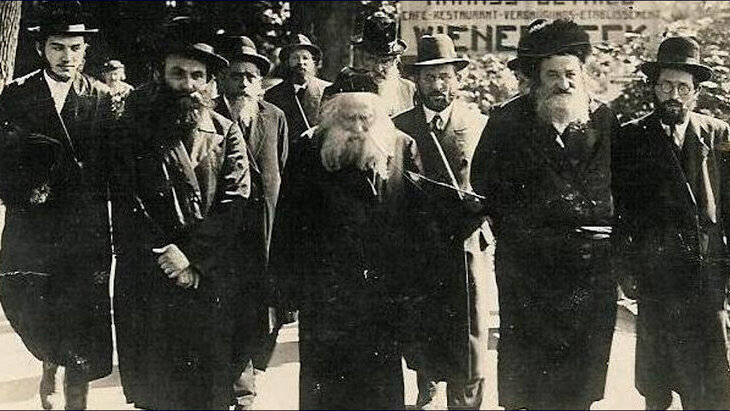
Initially a movement largely of the poor and uneducated, Hassidism emphasized spirituality in everyday life.
The Hassidic movement ― the movement of the "pious ones" or Chassidut, in Hebrew ― was founded in the 18th century in Eastern Europe by Rabbi Israel ben Eliezer, who became known as the Ba'al Shem Tov, which means "Master of the Good Name."
He was born in 1698 in Okup, in Podolia province (of what is now Ukraine) near the Dniester River. The Ba'al Shem Tov (who was also known as the Besht) was a poor orphan child who worked in the Carpathian Mountains as a laborer. During this time he studied with a secret society of Jewish mystics, the Nestarim, and he eventually became a revered rabbi.
He traveled from community to community, developing a reputation wherever he went as a spiritual holy man and mystical healer, attracting a huge following.
His teachings revolutionized the demoralized, persecuted Jews of Eastern Europe.
After the pogroms and massacres, (see Part 49), large parts of Eastern European Jewry had slipped into dire poverty. In addition to the tremendous physical destruction wrought by the Chmielnicki massacres, the tremendous disappointment caused by the false Messiah Shabbetai Tzvi (see Part 51) left much of the Jewish population of Eastern Europe in a collective state of deep depression. One of the victims of this situation was Jewish scholarship, with only an elite few studying in yeshivas while the rest eked out a meager living. As a result of the decrease in scholarship, Jewish religious life suffered ― with the average Jew not connecting either intellectually or spiritually with God. And this is what the Ba'al Shem Tov sought to change.
His teachings (he left no writings) brought about a whole movement which emphasized the idea of bringing God into all aspects of one's life, particularly through intense prayer and joyous singing. He taught that even the deeds of the simplest Jew, if performed correctly and sincerely, were equal to those of the greatest scholars.
Hassidic thought stressed the importance of devekut or "clinging to God." This involves feeling the presence of God in all aspects of one's existence and not just through Torah study and observance of the commandments.
The following parable describes the way the early Hassidic masters diagnosed the situation:
An apprentice blacksmith, after he had learned his trade from the master, made a list for himself of how he must go about his craft. How he should pump the bellows, secure the anvil, and wield the hammer. He omitted nothing. When he went to work at the king's palace, however, he discovered to his dismay that he could not perform his duties, and was dismissed. He had forgotten to note one thing-perhaps because it was so obvious-that first he must ignite a spark to kindle the fire. He had to return to the master, who reminded him of the first principle which he had forgotten.(1)
Trying to infuse one's life with spirituality in all aspects caught on very rapidly among the simple Jews in particular. Very rapidly, especially in Eastern Europe, thousands upon thousands of Jews were drawn to the Hassidic movement.
Hassidic Dynasties
When the Ba'al Shem Tov died in 1760, he was succeeded by Rabbi Dov Ber or Mezrich whose disciples went off to develop particular streams within the Hassidic movement and to found their own dynasties. There were many significant personalities in this group. (For those interested in reading about them, see Chassidic Masters: History, Biography and Thought by Aryeh Kaplan.) We will mention just a few:
Hassidic sects have names like Kotzk, Sanz, Belz, Satmar, Lubavitch, Skvar. These were all names of communities in places like Poland, Lithuania, Ukraine, etc. When these Hassidic communities moved, they took the names with them. So today in Israel you have Kiryat (city or district) Sanz, Kiryat Belz. In New York, there are the New Square Hassidim ― they were the Skvar Hassidim whose original name became anglicized to Square.
The movement had a huge impact in spiritually revitalizing the Jewish world. It kept a lot of Jews in Judaism and put a lot of joy back into Judaism.
Writes Aryeh Kaplan (in his essay "A World Beyond" in Chassidic Masters: History, Biography and Thought p. 4):
"Hassidism uplifted the masses, but it would be wrong to suppose that its teachings were designed solely as a kind of spiritual medicine, necessary when one is ill, but of no value for the healthy. An important teaching of Hassidism is that its insights are important to the spiritual well-being of every Jew. Although its masters aimed much of their energies at helping poor, illiterate Jews, it would be incorrect to say that this was the main characteristic of Hassidism, since the movement also brought new vision and depth to the entire body of Jewish thought."
The Opposition
As it spread, the Hassidic movement also attracted tremendous opposition from those more traditionally and intellectually-minded Rabbis, the majority of whom were against the Hassidic movement.
The major personality who was opposed to the Hassidic movement was Rabbi Elijah ben Shlomo Zalman, known as the Vilna Gaon ("Genius of Vilna") and also the Gra (acronym for the "Gaon Rabbi Elijah") who lived in this time period (1720-1797). The Vilna Gaon was a brilliant scholar who made an enormous impact on Jewish learning. A person of wide-ranging interests and author of some 70 books on various subjects, the Vilna Gaon seemed to excel in every aspect of scholarship. He knew Jewish law, Kabbalah, mathematics, astronomy, physics, anatomy. He barely slept; he just catnapped four times a day for one hour, and the rest of the time he studied. Whenever he got tired, he stuck his feet in a bucket of cold water to wake himself up. He never wanted to waste a minute. Although he never made it to Israel, he sent many of his students to live there.
What worried the Vilna Gaon was not so much the Kabbalistic aspects of Hassidism (after all, he himself had studied Kabbalah) but the potential for producing another false messiah (like Shabbetai Tzvi whose story we covered in Part 51. The Vilna Gaon also objected to the Hassidic concept that God is "in all things" as too close to pantheism or the idea that everything was equally holy.(2)
He was also concerned about the concept of the rebbe (as the leader of each Hassidic sect was called) because he felt that the Hassidic concept that a person elevates himself spiritually simply by "attaching" himself to a holy person (a rebbe) was an idolatrous idea.
Another significant concern of the Vilna Gaon was de-intellectualization of Torah. The Hassidic movement was largely a movement of simple, uneducated Jews, and he worried that Jewish scholarship was going to be replaced by singing and dancing. A religion that was a synthesis of heart and mind would become all heart and no mind.
Finally, the Vilna Gaon, and many other rabbis strongly objected to the fact that the Hassidim had changed the text of the prayer as this was considered a serious break with tradition and wholly unacceptable.
The Vilna Gaon was so strongly opposed to the Hassidic movement that he and others like him came to be called misnagdim, which means "those who are against." In 1772, the misnagdim excommunicated the hassidim, but the ban did not stick. The following is excerpts from the excommunication of Hassidim (April 1772):
Our brethren, sons of Israel…as you know, new people have appeared, unimagined by our forefathers….and they associate amongst themselves and their ways are different from other children of Israel in their liturgy…they behave in a crazed manner and say that their thoughts wander in all worlds…And they belittle the study of the Torah, and repeatedly claim that one should not study much, nor deeply regret ones' transgressions…Therefore, we have come to inform our brethren, Children of Israel, from near and far…and top sound to them the voice of excommunication and banishment….Until they themselves repent completely….(3)
(For more on this subject, see Triumph of Survival by Berel Wein, pp. 86-119.)
While the creation of the Hassidic movement did initially cause a serious split in the Jewish world, it did not create a permanent separation. Today we can see hassidic sects who have become quite scholarship-minded, opening their own yeshivas and studying the Talmud intensely.
In hindsight we see that the Hassidic movement contributed significantly to the revitalization of Eastern European Jewry. It kept a lot of people connected to Judaism who could well have been lost because they didn't have the time to study. And the pressure brought by the misnagdim against the hassidim acted as a brake in keeping them from going too far.
As a result of the Hassidic contribution, Judaism became stronger and more ready to face the assault from a new secular movement in the Western called "The Enlightenment."
1. Raphael Jospe, ed., Great Schisms in Jewish History,(Ktav Publishing House, 1981), p. 129
2. Pantheism-The doctrine identifying the Deity with the various forces and workings of nature.
3. Paul Mendes –Flohr & Yehuda Reinharz ed., The Jew in the Modern World, (Oxford University Press, 1995), p. 390.