

The Chief Rabbi of the British Commonwealth spells out his view on the issue of Jewish continuity and how to achieve it.

by Chief Rabbi Jonathan Sacks

The Jewish people, having survived for thousands of years in the most adverse circumstances, including the Holocaust, is today threatened by intermarriage and assimilation. Jewish communities throughout the diaspora are experiencing demographic decline. Why has this happened, and can anything be done to reverse the trend?

The particular challenge facing Jews today is how Jewish identity may be sustained in an open, secular society. The greatest danger is failure to recognize that times have changed and that, in consequence, communal priorities need to change also.

Times have changed, and we are beginning to sense how suddenly and radically they have changed. We had grown used to a situation in which Jewish identity was passed on through the generations by habit, memory, external events and an inescapable sense that being Jewish is what we are. Belatedly we have discovered that for our children, being Jewish is no more than a matter of choice. They know that they can choose otherwise, if not for themselves then for their children. They will choose to be Jewish for one reason only, that knowing the drama of Jewish history, the richness of Jewish life, the grandeur of Jewish ethics and the majesty of Jewish faith, they are proud to be Jews.

There is only one cogent argument against intermarriage, and it is this. To be a Jew is to be a member of the people of the covenant, an heir to one of the world's most ancient, enduring and awe-inspiring faiths. It is to inherit a way of life which has earned the admiration of the world for its love of family, its devotion to education, its philanthropy, its social justice and its infinitely loyal dedication to a unique destiny.

It is to know that this way of life, passed on from parents to children since the days of Abraham and Sarah, can only be sustained through the Jewish family; and knowing this, it is to choose to continue it by creating a Jewish home and having Jewish children. No one who has been touched by Judaism's wings of eternity would willingly break the link between the past and the Jewish future. This and only this will ensure that we have Jewish grandchildren.

FORGING THE PLAN

How do we achieve this? At the very outset, I knew that this would be the greatest challenge of my Chief Rabbinate, and the greatest single challenge facing today's diaspora as a whole. Despite the fact that the core of the solution is education, the process of acculturation is already too far advanced for this to be our sole response. Most of our children attend, and in the future will continue to attend, non-Jewish schools.

There is the question of those who have left school and perhaps have gone to university, or who have already begun their careers. There is the problem of educating parents as well as children, for what will we gain if our children hear one message at school and another conflicting message at home? What about the many social contexts in which young Jews can stay Jewish and which are not primarily educational, such as youth clubs, friends, meeting places, organizations and social events? How will any of this help if we do not make our synagogues genuine centers of community, warm, welcoming and all embracing?

A vast global policy is needed, with learning at its heart, but wider than anything normally associated with the word "education."

It will be difficult. But it will be possible, if we are prepared to change our priorities because times have changed.

RENEWED OR ABANDONED

Two factors might sabotage a solution. The first is despair, which we must resist at all costs. If we believe nothing can be done, then nothing will be done. The Jewish people has never in the past yielded to despair, and now is not the time to begin.

The second factor would be a failure to understand that times have changed. Let me candidly admit that I did not go to Jewish schools. Neither did my parents. My generation, and that of our parents and grandparents did not need intensive Jewish education to remind us that we were Jews. But our children belong to the fourth generation. What was enough for us is not enough for them. In the fourth generation, Judaism is either renewed or it is abandoned. There is no other alternative.

We are not our parents, and our children are not us. Our parents sought to give us the things they did not have when they were children: material comforts, a good secular education, the chance to pursue a profession. They tried to give us the opportunities which they themselves had missed.

We in our turn must try to give our children what we lacked, namely the chance to experience, live, know and understand our Jewish heritage. That is the challenge.

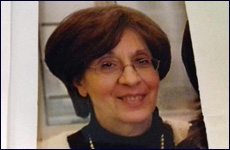
Professor Jonathan Sacks www.chiefrabbi.org is Chief Rabbi of the British Commonwealth.Article reprinted with permission from http://www.whymarryjewish.com.

Published: Saturday, May 19, 2001

Aish.com relies on your support. Click here to support us.

Visitor Comments: 10

  • (10) Tracy Moskoske , September 24, 2001

    Take Action on intermarriage

    There are to many vague suggestions of what should be done regarding intermarriage in most of the articles that I've read regarding this huge problem. Here are my specific suggestions of what should be done.
    (**I am a 24 year old woman who has a pulse on this issue)
    1. Young singles in the community who are passionate about keeping the Jewish faith should make house parties or other similiar events where people can meet.
    2. People in the community (young and old) should always be looking out for one another. Always try to connect people, ie:" I know an amazing guy, would you like to go on a date with him?" We all know single people. How often do we try to make connections? Most of us are to involved in ourselves!
    3. I believe that Aish HaTorah is a strong tool for igniting the jewish spark in people. Put money into promoting events.
    4. Be nice to every Jew. Many people are turned off from marrying a Jewish person because some people claim that the women are "JAPS" and the men are arrogant. I know that these are stereotypes, but I've heard this as an excuse over and over again. We all have to work on ourselves to become better people.
    For all those who will read this, please take some of these suggestions and put them into practice.

  • (9) , May 30, 2001

    The only way to prevent intermarriage is this: education. And not just in school, but in the home. Children should be learning about the facts of Judaism in school and then practicing them at home, with their parents. One or the other does not work. Only both can make Jewish children knowledgeable and proud of Judaism.

  • (8) Michael Siroky , May 24, 2001

    Where is G-d?

    Rabbi Sacks makes many excellent points in his discussion of maintaining Jewish continuity. However, I was struck by the absence of G-d in this article, not being mentioned even once. We have to ask ourselves, what is really unique and valuable about Judaism? The Rabbi mentions our long and proud history, love of family, devotion to education, philanthropy and social justice. But many other peoples have long histories and love their families. I don't know of too many people more enamored of ignorance than of education. As far as philanthropy is concerned, Carnegie, Ford and Rockefeller were not Jewish. No, what makes the Jewish people unique is our covenant with G-d. What makes the Jewish people unique is our role as G-d's elect in this world.

    " Did ever people hear the voice of God speaking out of the midst of the fire, as thou hast heard, and live?
    34: Or hath God assayed to go and take him a nation from the midst of another nation, by temptations, by signs, and by wonders, and by war, and by a mighty hand, and by a stretched out arm, and by great terrors, according to all that the LORD your God did for you in Egypt before your eyes?
    35: Unto thee it was shewed, that thou mightest know that the LORD he is God; there is none else beside him.

    In our supposedly modern age, it is considered gauche to mention G-d's existence but without it, no covenant can exist. Of course we need education but if it is a Jewish version of modern godless secular humanism, it will be of no use. We must restore faith if we are to maintain Judaism. That is what has worked in the past and that is what will work in the future.

  • (7) Daniel , May 23, 2001

    Missing important point

    Rabbi Sacks is correct - We have a real dilemma on our hands. What the Jewish community always fails to realize, however, is that we are presented with a remarkable opportunity to increase our numbers this very day. Jews of the United States are no longer persecuted in the ways that they were in Europe 50 years ago. Our beliefs are once again appealing to many non-Jews and Jews alike. Therefore, it is necessary to change our constant fear of disappearing to one of welcoming others so that our religion may finally become one of spiritual necessity - not the one of ritual and culture without the spiritual backing that has so lacked because of our centuries of oppression. Successful cultures and peoples don't get stuck in the past - they look toward the future and it is up to the new generation to form a Judaism for all who share our interests - not simply for those who were born with Jewish genes. Instead of condemming intermarriage, we must educate our community in the ways of raising a Jewish family and perhaps then, those who would intermarry will in fact, be able to find someone with a Jewish spirit to convert to Judaism.

  • (6) Anonymous , May 21, 2001

    Education and a Jewish home is what is needed.

    Rabbi Sacks touches on some very important issues here. The lack of Jewish education is contributing to intermarriage. However, one aspect that Rabbi Sacks did not mention was the need for a "Jewish Home." Meaning that one bring up their children in a warm, traditional Jewish home. That means keeping Kashruit, celebrating Shabbos together, and not abandoning Jewish tradition for certain material comforts. With the Jewish home, comes Jewish education, and thus the hope for a solid Jewish community for well into the 21st century.

  • See All Comments Add Comment

About the Author

Chief Rabbi Jonathan Sacks

Rabbi Sacks is the Chief Rabbi of Great Britain.

Related Articles

Sponsors

    Aish.com Features

    • Chanukah: December 12 - 19, 2009
    • What's new at aish.com
    • Candlelighting Times
    • Kaddish & Mourning
    • Your Hebrew Name & Birthday
    • Programs in Israel