

 Raise a Glass to Freedom

6 min read


The tragic fate of one survivor's remarkable heirloom.
“Remember that you were once slaves in Egypt…”
The exodus and the miracles of the Passover story happened a long time ago, but they are still part of our contemporary consciousness because of the power of memory. Thomas Cahill, the Catholic writer who authored the best-selling book, The Gifts of the Jews, concluded that it was the Torah with its commandments to remember that gave the world the concept of time and a reverence for the past. Passover speaks to all generations, reminding us to not only recall our past but to also shape our future.
But not everyone remembers, and tragically, some choose to forget, as demonstrated by the incredible incident I had with Shmuel's Seder plate.
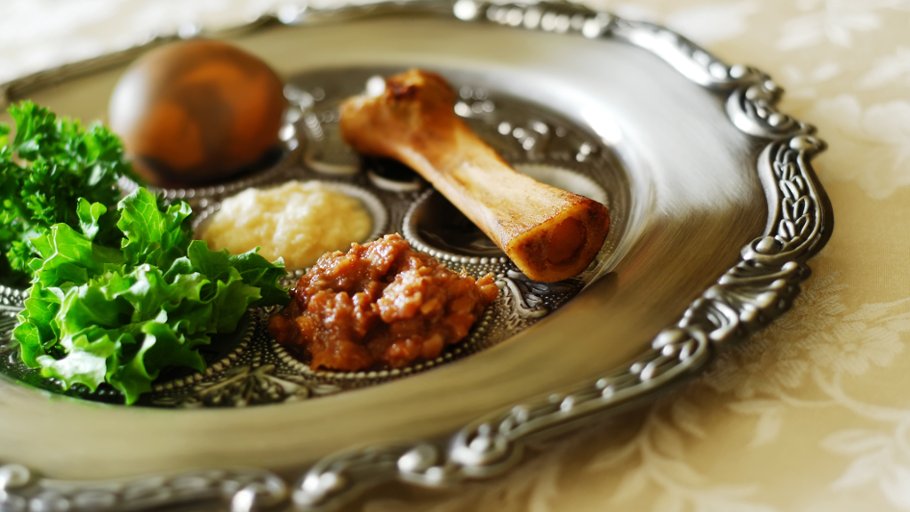
A few years ago I was browsing in an antique store on the East Side in New York when I spotted an all-too-familiar object. I recognized it immediately, even before I spotted the family name clearly etched on its border. How could I not know what it was when I had been so involved in its story? After all, my eulogy of Shmuel, a miraculous survivor of the infamous Auschwitz concentration camp, focused on it.
What a tale it had been. The Germans had rounded up all the Jews in his little town for deportation. Some believed that they were merely being transported to another site to be used for labor. But Shmuel knew that they were meant to be murdered. He understood that the Nazis wanted to eliminate every Jew as well as every reminder of their religious heritage.
Had he been caught, he would have paid with his life.
So Shmuel took a chance. Had he been caught, he would have paid with his life. But he did what he had to do so that something might remain -- so that even if not a single Jew in the world stayed alive, someone might find it, reflect, and remember. He paced off 26 steps, corresponding to the numerical value of God’s name, from the apple tree alongside his house and carefully buried his treasure – a silver Passover plate.
He wished he could have hidden much more. How he wanted to preserve a Torah scroll. But he had so little time, so little space for concealing an object of value. His choice, in retrospect, seemed almost divinely inspired for its symbolism – the key vessel used to commemorate the festival of freedom. Shmuel thought, with what he later conceded was far too much optimism, miracles could perhaps once more occur even in modern times. And from that day forward not a day went by in the hells of the concentration camps that his mind did not return to his Seder plate in its special hiding place.
Shmuel could never explain how he, out of all his family and friends, survived. In his heart of hearts, he once confided to me, it may have been because he viewed his continued existence on earth as a holy mission -- to go back to his roots and uncover his own symbol of survival. Incredibly enough, in ways that defy all logic and that Shmuel only hinted to me, this escapee of 20th-century genocide was reunited with his reminder of deliverance from age-old Egyptian oppression. Shmuel journeyed back to his home, found his tree, counted off his steps, dug where he remembered he had buried it and successfully retrieved his Seder plate. It became a symbol of his own liberation as well. With it he celebrated dozens of Passovers, until his death.
That Seder plate, in almost total disbelief, is what I saw in the shop for sale. Where was it from, I inquired. What was it doing for sale when it carried with it so many precious memories? "Yes, I want to buy it," I assured the dealer, "but I need to know how you happen to have it."
"It was part of the sale of the contents of an estate by the children," the dealer replied. You see, the deceased was religious but his descendants aren’t. So they said they don’t really have any need for 'items like these.'"
The very symbol that sanctifies memory was discarded by those who forgot their past.
The very symbol that sanctifies memory was discarded by those who forgot their past.
If you have a loved one who suffers from Alzheimer's you know how horrible it can be to live without an awareness of events that came before. We don’t have a name for a similar condition that describes ignorance of our collective past. Yet the voluntary abandonment of historic memory is equally destructive.
How I wish that the unsentimental harshness of Shmuel’s descendants was just an aberration, a remarkably unusual demonstration of insensitivity not likely to be duplicated by others. But the sad truth is that we are part of a “throwaway” culture that gives equal weight to used cars, worn furniture, and old family treasures. What has served the past is of no interest if its sole claim to respectability is its gift of associations.
Memorabilia have lost their allure because we no longer revere the meaning of memories. So what, I am often asked, if my grandparents used this every holiday? We have no space, we have no need for it. As if utilitarian function is the only rationale for holding on to something that enables us to preserve our past!
The ring with which I married my wife may not be the most expensive but I pray it remains in my family as a legacy of the love we shared, perhaps to be used again by my grandchildren. The cup with which I usher in the sanctity of every Sabbath may reflect the poverty of my youth, but I hope it is passed on to the future as a testament to the importance of religious values in our household. If what we treasured is held sacred by my children, then perhaps what we lived for will also be reverentially recalled.
“Unless we remember, we cannot understand.”
“Unless we remember,” English novelist Edward Morgan Foster put it so beautifully, “we cannot understand.”
That’s why I weep for my friend Shmuel, whose family has become an orphan in history, severed from its past.
And that’s why I keep retelling Shmuel’s story on Passover, because I believe it captures the essential message of this holiday. God commanded us to remember because it is only by treasuring the messages of the past that we can understand the present and hope for a more blessed future.